
Quick Summary
Commercial facilities must balance rapid pedestrian throughput with strict physical breach prevention when deploying automatic systems turnstiles across lobby vestibules and perimeter fence lines. Matching hardware models like optical SlimLane speed gates, retractable SmartLane barriers, or full-height TRS turnstiles to specific security environments requires precise structural anchoring, solar sensor calibration, and seamless credential integration from Absolute Gate Repair Solutions. Property managers will understand setup costs, ADA lane requirements, and routine diagnostic needs to confidently contact Absolute Gate Repair Solutions for a free, upfront estimate on commercial access control integration.
Automatic Systems Turnstiles: Fast Setup and Secure Commercial Access
Managing pedestrian traffic in a busy commercial building requires dependable entry hardware that prevents unauthorized access without creating bottlenecks. Automatic turnstiles remain a dominant mechanism category across commercial access control sales, reflecting a steady shift toward automated perimeter and lobby security. Independent market research estimates that the global turnstiles market, valued at approximately $1.43 billion in 2025, will expand toward $2.62 billion through the 2025 to 2035 forecast period. Choosing the right hardware requires understanding how different turnstile architectures perform under real-world building conditions.[1]
For property managers and security directors, selecting between optical swing lanes, retractable glass barriers, and full-height exterior cages comes down to throughput speed, architectural aesthetics, and physical deterrence. Absolute Gate Repair Solutions assists commercial facilities throughout Pasadena and surrounding communities with site planning, structural anchoring, and turnstile access control integration.[3]
Automatic Systems Turnstiles: Overview and Product Lines
Automatic Systems manufactures entrance control equipment ranging from architectural speed gates to heavy-duty perimeter barriers. Their systems regulate pedestrian flow using precision optical arrays, motorized barriers, and clear status lighting.
Commercial installations generally select hardware from three primary categories based on traffic volume and security requirements:
- SlimLane Optical Speed Gates: Compact swing-glass barriers built for main corporate lobbies, government facilities, and transit hubs where high throughput and clean architectural lines matter most.
- SmartLane Retractable Turnstiles: High-deterrence speed gates with retractable glass panels that quickly retract into the cabinet housing, providing increased anti-tailgating protection.
- TRS Full-Height Security Turnstiles: Floor-to-ceiling rotating steel barriers engineered for exterior fence lines, construction yards, and unattended perimeter entry points.
Comparison: Automatic Systems Turnstile Models and Configurations
Selecting the right pedestrian barrier requires balancing daily throughput against physical breach resistance. The table below outlines core design differences across standard product families.
| Model Series | Barrier Style | Security Level | Target Environment | Typical Lane Width |
|---|---|---|---|---|
| SlimLane Series | Dual swinging glass panels | Medium to High anti-tailgating | Indoor corporate lobbies and transit centers | 24 inches (standard) to 36 inches (wide ADA) |
| SmartLane Series | Retractable sliding glass | High physical deterrence | Indoor secure facilities and data centers | 23 inches (standard) to 36 inches (wide ADA) |
| TRS Series | Full-height rotating arms | Maximum perimeter barrier | Outdoor perimeter fences, industrial sites | Single or double passage configurations |
1. SlimLane Optical Speed Gates: Lobby Flow and Compact Footprints
Automatic Systems SlimLane speed gates are standard choices for modern corporate reception areas. They combine narrow cabinet widths with motorized glass obstacle panels that swing in the direction of pedestrian travel.
Double Swing Obstacle Mechanism
SlimLane gates use synchronized brushless DC motors to open and close twin glass panels in less than a second. This rapid cycle time keeps pedestrian queues moving during morning arrival peaks. Because the panels swing open parallel to walking traffic, the cabinets maintain a slim footprint that fits tight vestibules.
Infrared Detection Grid
High-density optical sensor matrices line the interior passageway. These beams track pedestrian direction, detect unauthorized tailgating within inches of an authorized user, and identify trailing luggage or carts to prevent false obstruction alarms.
2. SmartLane Retractable Barrier Turnstiles: High-Security Anti-Tailgating
Need automatic systems turnstiles?
We’re available now — call for a fast, free estimate.
When physical deterrence takes priority over a slim profile, the Automatic Systems SmartLane series provides an imposing physical barrier. Rather than swinging outward, the tempered glass panels slide directly into the cabinet walls upon credential authorization.
Retractable Panel Mechanics
SmartLane sliding panels extend up to 67 inches in height, making crawl-under or vault-over attempts practically impossible without triggering immediate intrusion alarms. The electromechanical drive system provides smooth, rapid retraction while maintaining firm resistance against forced push-through attempts.
Emergency Egress and Safety Features
During power loss or fire alarm activation, the obstacle panels automatically retract into the housing via mechanical counterweights or battery backups, creating a clear escape corridor that meets life safety codes.
3. TRS Full-Height Security Turnstiles: Exterior Perimeter Defense
Unattended perimeter gates demand heavy physical barriers that prevent climbing and unauthorized entry around the clock. The TRS series full-height turnstiles provide continuous perimeter containment.
Structural Steel Construction
TRS turnstiles feature heavy-gauge galvanized or powder-coated steel posts, curved anti-climb cages, and three- or four-rotor arm configurations. Mechanical dampening systems ensure smooth rotation without aggressive arm bounce-back.[5]
All-Weather Reliability
Protected drive heads, sealed internal bearing assemblies, and integrated heaters allow TRS turnstiles to operate reliably in exposed environments, enduring rain, wind-blown dust, and temperature extremes along outdoor perimeter fence lines.
4. Wide-Lane Barrier Options: ADA Compliance and Material Transport
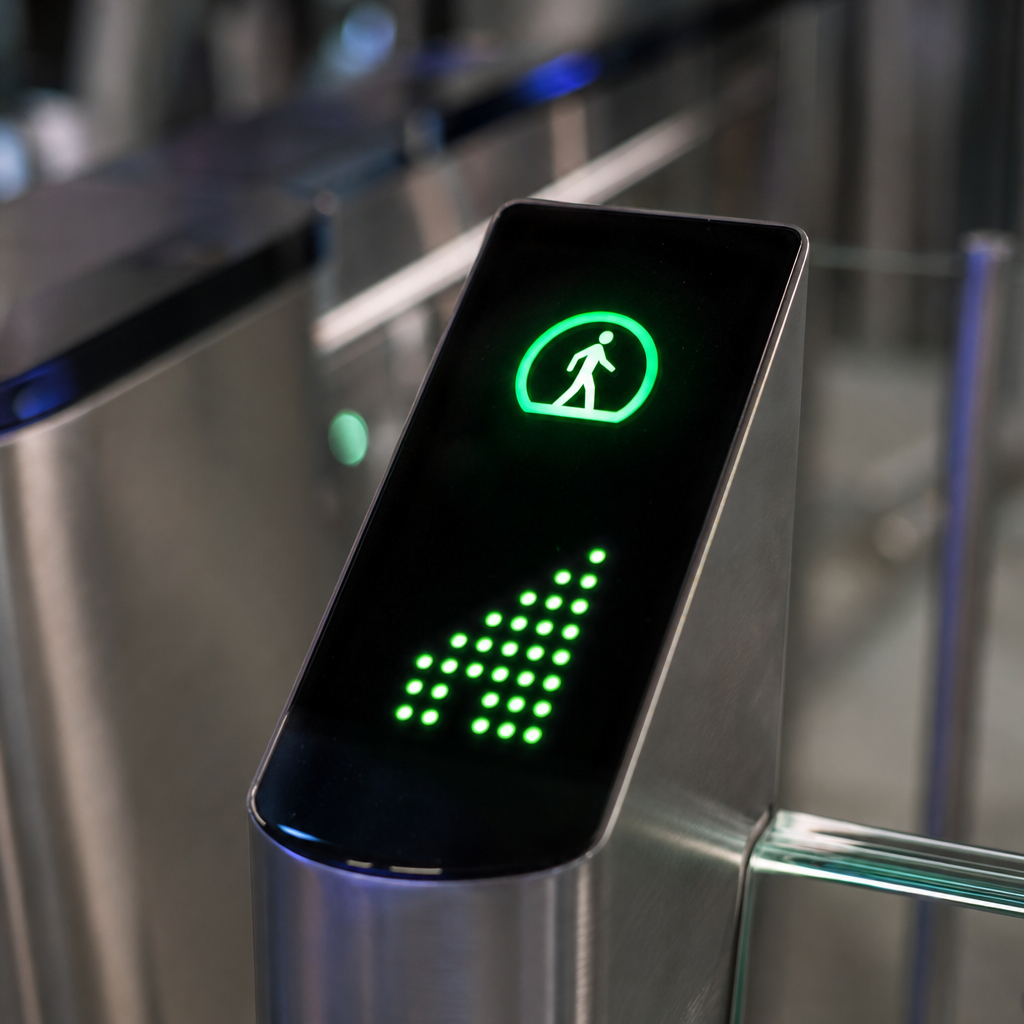
Facilities must provide accessible passage routes that meet Americans with Disabilities Act (ADA) requirements. Automatic Systems supplies dedicated wide-lane configurations across both the SlimLane and SmartLane product lines.
Clear Opening Widths
Standard speed gate lanes typically offer 23 to 24 inches of clear passage width. ADA-compliant wide-lane models extend this clearance to 36 inches, easily accommodating wheelchairs, mobility devices, delivery hand trucks, and cleaning carts.
Synchronized Wide Barrier Control
Operating wider glass panels requires higher-torque drive motors and custom dynamic braking profiles. Wide-lane cabinets balance speed and obstacle detection sensitivity, ensuring safe operation around slower-moving pedestrians or mobility equipment.
5. Integrated Access Control: Readers, Biometrics, and Controllers
Automatic Systems turnstiles function as physical execution hardware within a broader security ecosystem. They easily interface with third-party access control platforms and credential readers.[2]
Reader Integration and Housings
Cabinets feature dedicated integration bays under tempered glass top covers or flush-mounted side brackets. These spaces house proximity card readers, NFC/Bluetooth mobile credential interfaces, barcode scanners for visitor passes, and facial recognition or fingerprint terminals.
Signaling and Protocol Support
Internal controller boards accept standard dry contact relay inputs, Wiegand interfaces, and encrypted OSDP (Open Supervised Device Protocol) communication. This makes connecting turnstile banks to central security operations centers straightforward for real-time occupancy tracking and alarm monitoring.
6. Site Preparation, Anchoring, and Infrastructure Planning
Need automatic systems turnstiles?
We’re available now — call for a fast, free estimate.
A trouble-free turnstile installation begins below the finished floor. Because speed gates house sensitive optical sensors that must stay in precise alignment, mechanical foundation stability is essential.
Floor Leveling and Conduit Layout
Subfloors must be flat and structurally sound. Technicians run dedicated low-voltage access conduits, AC power feeds, and fire alarm override wiring through floor stub-ups positioned exactly within the cabinet mounting template before securing the baseplates.
Turnstile System Costs
Total project pricing varies widely based on lane counts, custom architectural finishes, credential hardware integration, and site preparation needs (such as concrete trenching or coring). A single waist-high tripod turnstile setup may cost between $3,000 and $7,000 installed, while multi-lane optical speed gate configurations often range from $15,000 to $35,000 or more per lane depending on software, reader hardware, and layout complexity.
7. Environmental Factors and Perimeter Transition Failure Points
When turnstiles sit in transition zones (such as covered outdoor breezeways, parking garage vestibules, or open lobbies with high glass atriums), standard installation practices often fall short. Technicians frequently see operational faults caused by physical and environmental factors rather than credential errors.
Sensor Calibration Drift
In semi-exposed entryways, significant temperature swings between morning shade and afternoon sun cause infrared emitter and receiver brackets to expand and contract microscopically. This thermal shift can degrade sensor alignment, causing random tailgating faults or delayed gate openings. Commercial technicians prevent this by using temperature-compensated optical arrays and rigid internal cross-bracing.
Solar Glare Blind Spots
Low-angle morning or late-afternoon sunlight beaming through glass entry doors can directly hit infrared receiver lenses. The high solar intensity washes out the pulsed optical signal, making the turnstile believe the lane is blocked. Proper site design accounts for solar angles, using optical hoods, polarized filters, or calibrated receiver frequencies to maintain reliable beam tracking.
Mechanical Post Deflection
Heavy pedestrian queues frequently apply lateral pushing force to turnstile end cabinets. If anchored into thin screed or poorly cured concrete, the posts deflect by fractions of an inch. While minor, this deflection bends the optical path across the lane out of alignment, causing erratic alarm cycles. Proper chemical anchoring into reinforced structural slabs eliminates post deflection under peak pedestrian traffic.
8. Turnstile Maintenance, Diagnostic Testing, and Local Service
Preventative maintenance keeps high-traffic pedestrian lanes operating safely while extending the working life of motorized drives, gearboxes, and optical arrays.
Essential Preventative Maintenance Checklist
- Optical Alignment and Cleaning: Clearing dust and smudges from internal IR lenses, checking beam signal strength, and recalibrating anti-tailgate detection zones.
- Mechanical Inspection: Checking drive belt tension, examining motor clutches, lubricating pivot bearings, and tightening floor anchor bolts to prevent cabinet wobble.
- Safety Testing: Testing obstacle detection resistance limits, verify emergency fire alarm release drop-outs, and checking battery backup power cycles.
Commercial Service and Repair Support
When turnstile barriers bind, show synchronization errors, or suffer physical damage from cart collisions, fast repair is critical to maintaining perimeter control. Absolute Gate Repair Solutions provides commercial turnstile maintenance, emergency troubleshooting, and access control integration across the greater Pasadena area.
Frequently Asked Questions About Automatic Systems Turnstiles
What are the most popular Automatic Systems turnstile models?
The SlimLane optical swing-glass series is the most common model for interior corporate lobbies, while the SmartLane retractable series is favored in high-security environments. For exterior perimeters and unattended boundaries, the TRS full-height rotating turnstiles are the industry standard.
How much does it cost to install Automatic Systems turnstiles?
Turnstile installations range from $3,000 to $7,000 for standard mechanical or waist-high barriers, and from $15,000 to $35,000+ per lane for optical speed gates like SlimLane or SmartLane systems. Final costs depend on lane width, architectural finishes, floor preparation, conduit trenching, and credential reader integration.
How do Automatic Systems turnstiles integrate with existing access control?
Automatic Systems equipment communicates through standard relay outputs, Wiegand controllers, and OSDP channels. They connect directly to existing badge readers, RFID cards, mobile apps, biometric scanners, and building management fire alarm systems.
Are Automatic Systems turnstiles ADA compliant?
Yes. Both the SlimLane and SmartLane model lines offer dedicated wide-passage configurations that provide a minimum 36-inch clear opening width to meet ADA accessibility standards.
What is the difference between SmartLane and SlimLane speed gates?
SlimLane speed gates use swinging glass panels on a narrow cabinet body, prioritizing rapid pedestrian throughput and a compact footprint. SmartLane turnstiles use retractable sliding glass panels that retract into the housing, offering higher physical breach deterrence against jumping over or forcing through the barrier.[4]
Who provides repair and maintenance for commercial turnstiles?
Turnstile maintenance and repairs are performed by licensed commercial access control and automated gate contractors. Absolute Gate Repair Solutions offers diagnostic testing, preventative maintenance, optical realignment, and mechanical repair services for commercial entrance systems across Southern California.
Need automatic systems turnstiles?
We’re available now — call for a fast, free estimate.
Sources
- Turnstiles Market Report | Global Forecast From 2025 To 2033 – dataintelo.com (2034)
- Automatic Turnstiles Market Size, Share & Forecast 2034 – theinsightpartners.com (2034)
- Commercial Turnstile Sales Market Research Report 2034 – dataintelo.com (2034)
- Automatic Turnstile Market Size & Share 2026-2032 – 360iresearch.com (2032)
- Turnstile Market Size, Share, Forecast Report 2026 – businessresearchinsights.com (2035)
Related reading: Gate Automation and Access Systems – Call Now-10% Off – Same-Day Service – Free Estimate
Related reading: Electronic Turnstile Gates – 10% Off & Free Estimate – Same-Day Service
Related reading: Remote Gate Entry System | Call Now-10% Off | Same-Day Service | Free Estimate
Frequently Asked Questions
How many turnstile lanes does a commercial building need to handle peak traffic?
Commercial planning typically allocates one optical turnstile lane per 25 to 30 pedestrians per minute during peak entry periods, ensuring queue times stay under two minutes. Facilities should always include at least one 36-inch ADA-compliant lane alongside standard lanes. Absolute Gate Repair Solutions assists property managers with pedestrian throughput calculations to configure the ideal lane count for their lobby dimensions.
Can Automatic Systems turnstiles be installed without trenching into finished floors?
Yes, surface-mounted raised floor plinths and cable raceway platforms allow turnstiles to be installed over delicate marble, tile, or post-tension concrete slabs without trenching. These modular platforms conceal all electrical and data cabling while maintaining ADA slope compliance. Absolute Gate Repair Solutions offers non-destructive installation methods to preserve architectural flooring during turnstile retrofits.
How do Automatic Systems speed gates operate during power outages or fire alarms?
In the event of a power failure or active fire alarm, the motorized barrier panels automatically retract into the housing or swing freely using battery backups and mechanical fail-safes. This instant release creates a free-flowing egress corridor that complies with local life safety and building evacuation codes. Absolute Gate Repair Solutions connects turnstile controllers directly into your building's emergency management system to ensure certified fail-safe functionality.
About the author
 |
Marcus Caldwell Marcus Caldwell has spent over a decade working in access control and physical security, specializing in driveway and perimeter gate systems. With a background in electrical engineering from California State Polytechnic University, Pomona, he focuses on integrating modern access technologies with durable mechanical solutions. He regularly writes about security upgrades and preventative maintenance for property owners in Southern California. |